Industry
Biotech
Client
Case Study
Cellura Scientific - Digital Platform for Streamlining Cell Biology Operations
Designing a digital backbone for cell biology labs
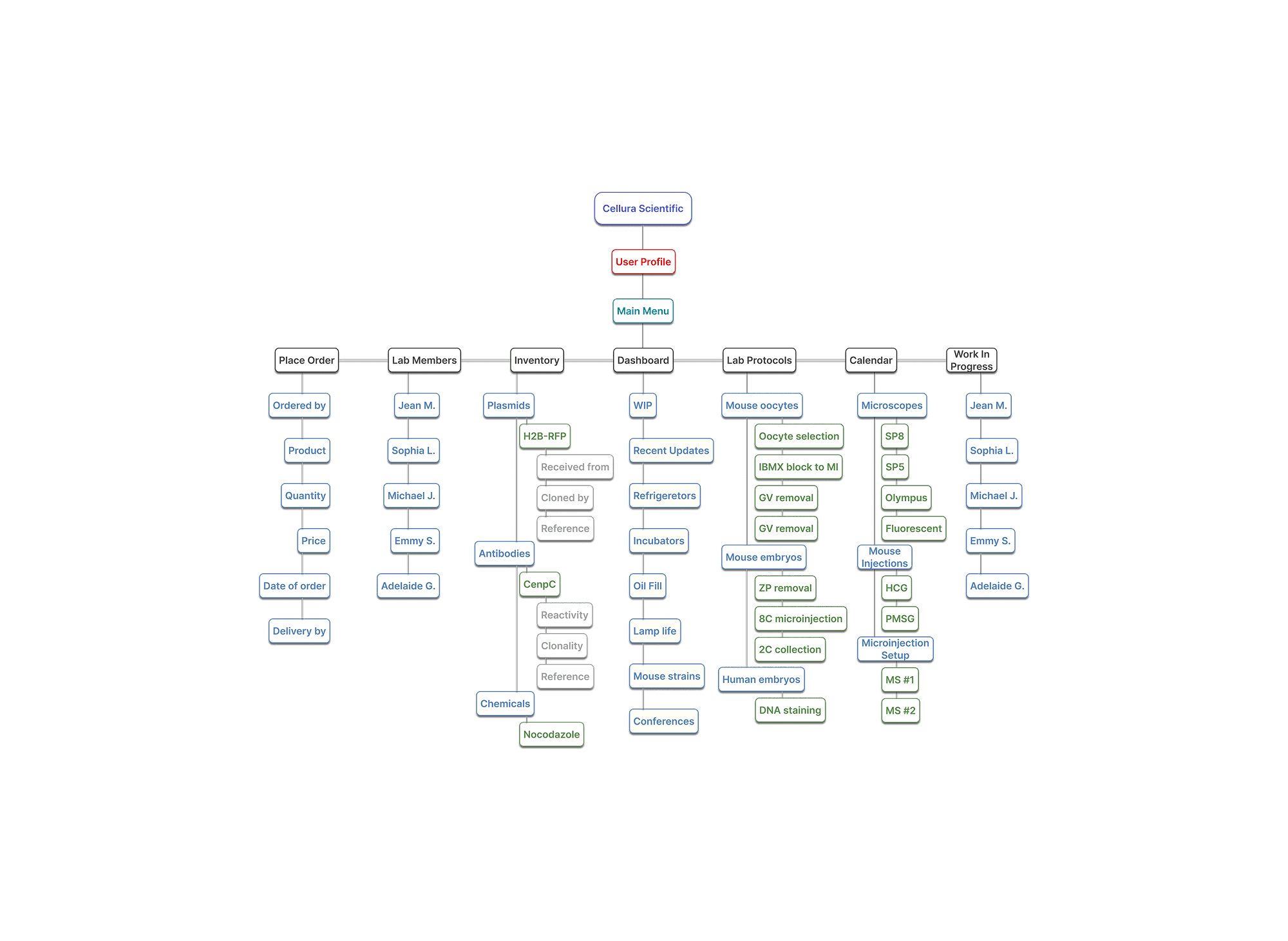
PROJECT TYPE DELIVERABLES Design challenge Desktop App Mockups Individual study TOOLS DURATION Figma 3 months MY ROLE UX/UI Designer End-to-end ownership: Research, Flows, IA, Wireframes, UI, Prototyping. Collaborated with researchers and lab managers. Concept to high-fidelity product design. BACKGROUND Cell biology labs operate in high-complexity environments with frequent onboarding of new students, postdocs, and interns, while relying on fragmented tools for protocols, inventory, instruments, and project tracking. There is an emergent need for an efficient system to integrate new personnel into the lab’s daily operations without compromising the productivity of existing projects or team members. Poor lab organization and staff management can lead to significant waste of resources and time and delayed publication or production process. CHALLENGE How might we design a platform that helps labs onboard people faster, reduce operational friction, and let researchers focus on science rather than logistics? Interviews conducted with students, postdocs, lab managers, and interns from cell biology laboratories identified key details about their daily lab activities, collaboration, and organization regarding shared spaces, instruments, and reagents. Key Insights Critical information about inventory, lab methods, and workflows is scattered across emails, shared drives and paper logs. Time lost searching for information and procedures. Manual coordination of shared lab documentation. Lack of centralized visibility of lab resources slows down experiments. New lab members feel overwhelmed in their first weeks. PROBLEM STATEMENT Busy cell biologists need easy access to critical lab resources and documentation, so they can avoid making errors, reduce the time it takes to become productive and focus their energy on scientific discovery rather than administrative logistics. A lab management platform could consolidate critical lab information and coordinate work across diverse team members. This digital hub should manage inventory, instruments, documentation and experimental planning, all to reduce operational friction and help everyone work more efficiently.
Key Features - Impact - Next steps
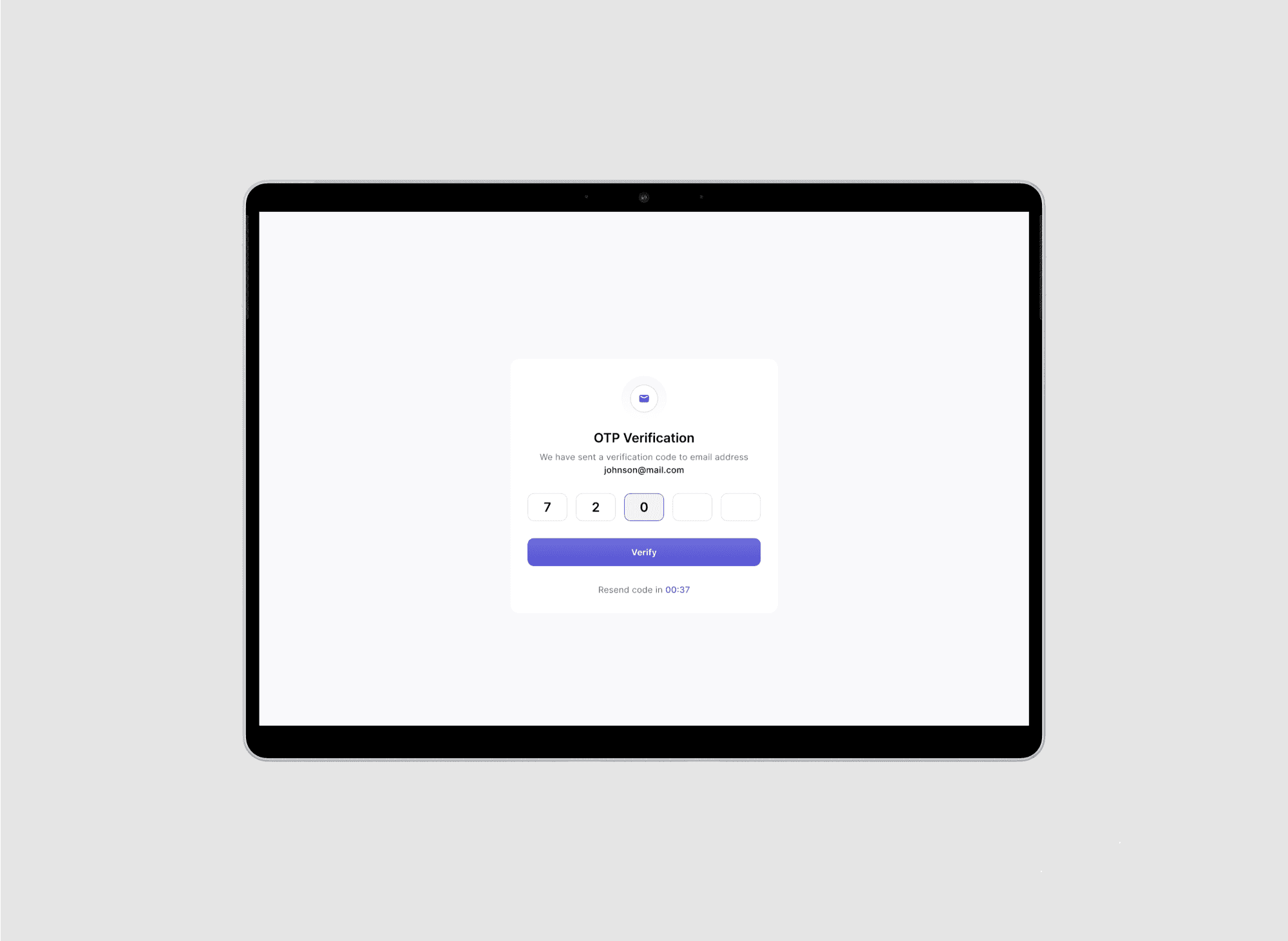
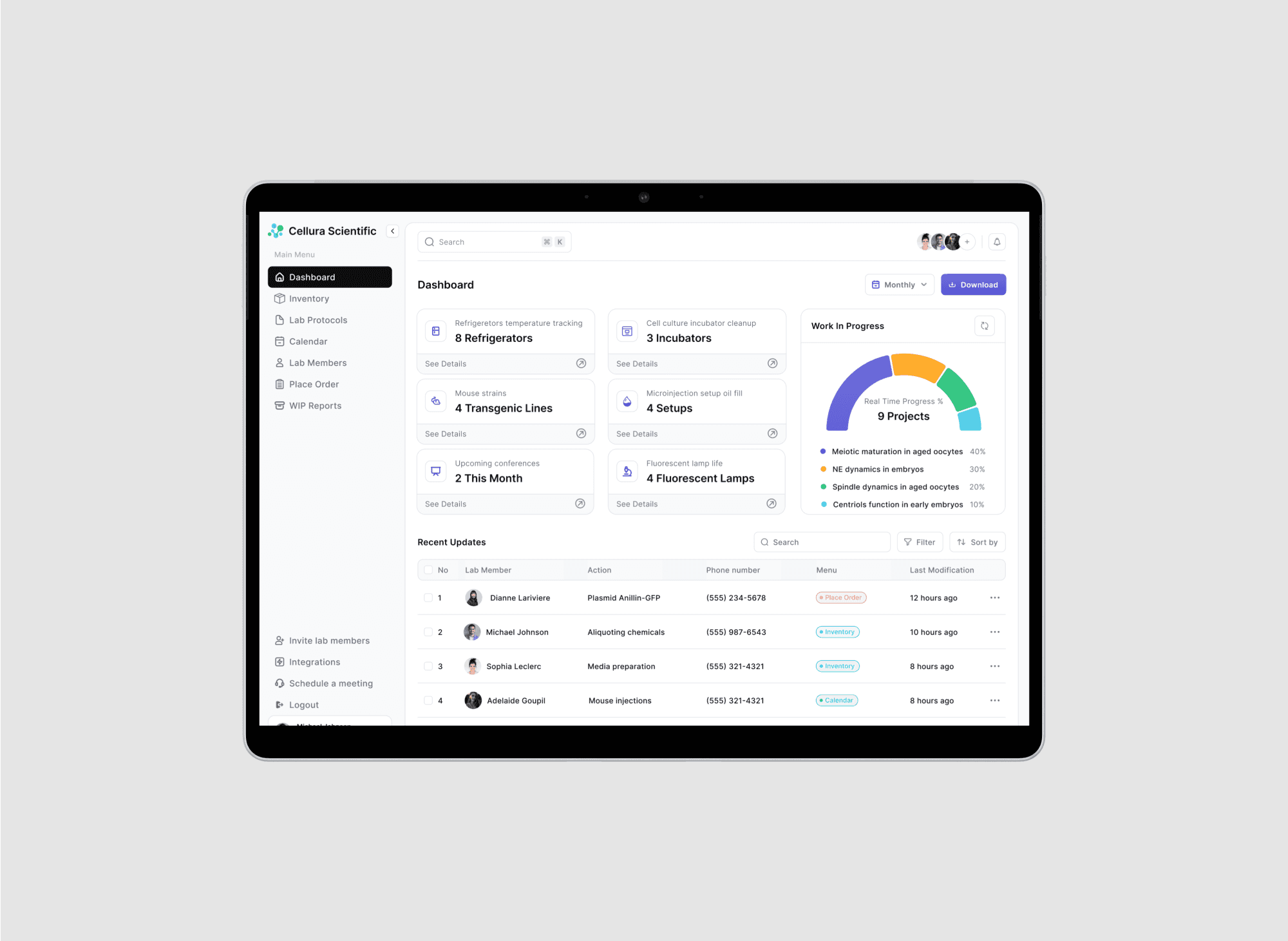
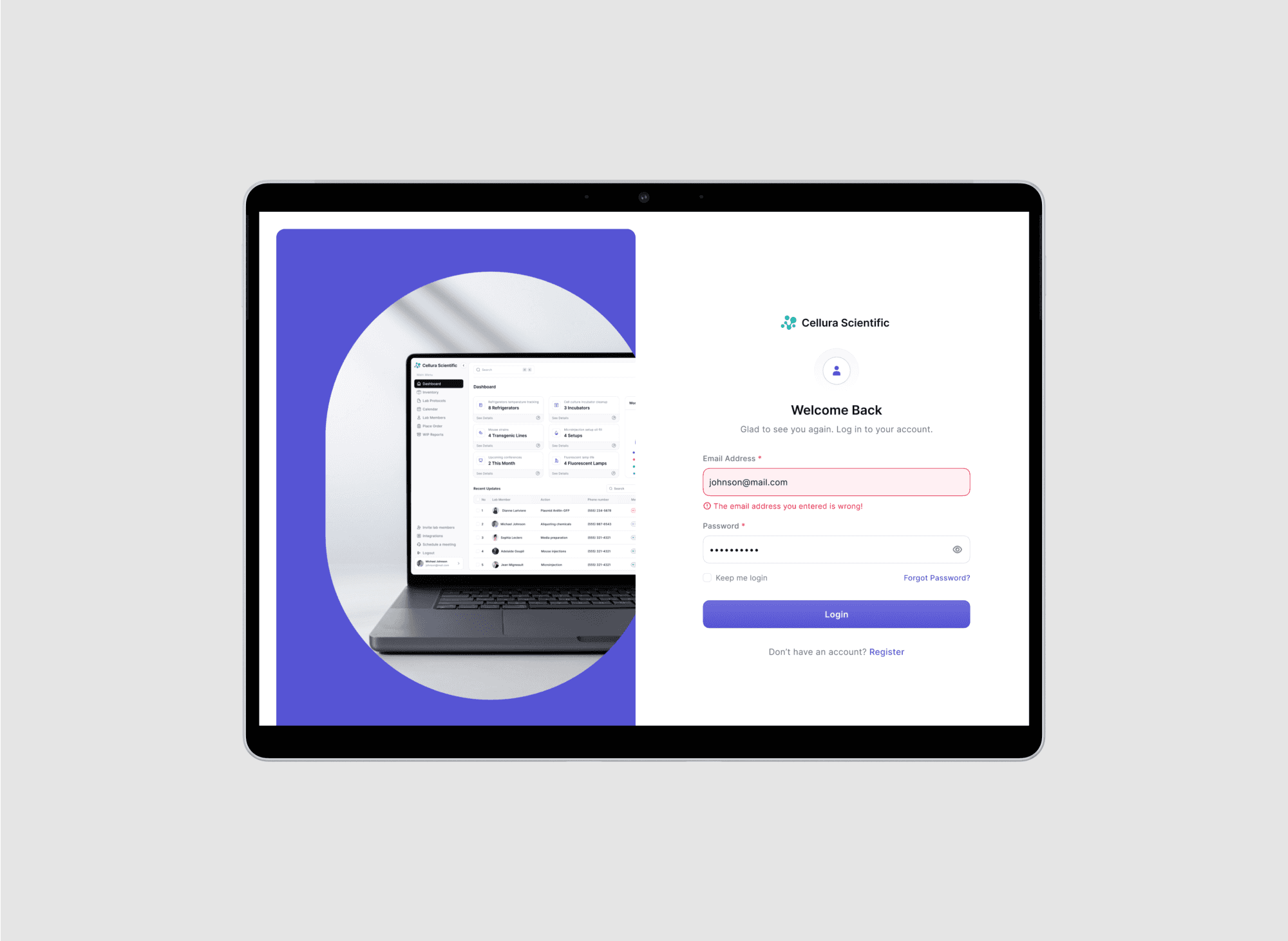
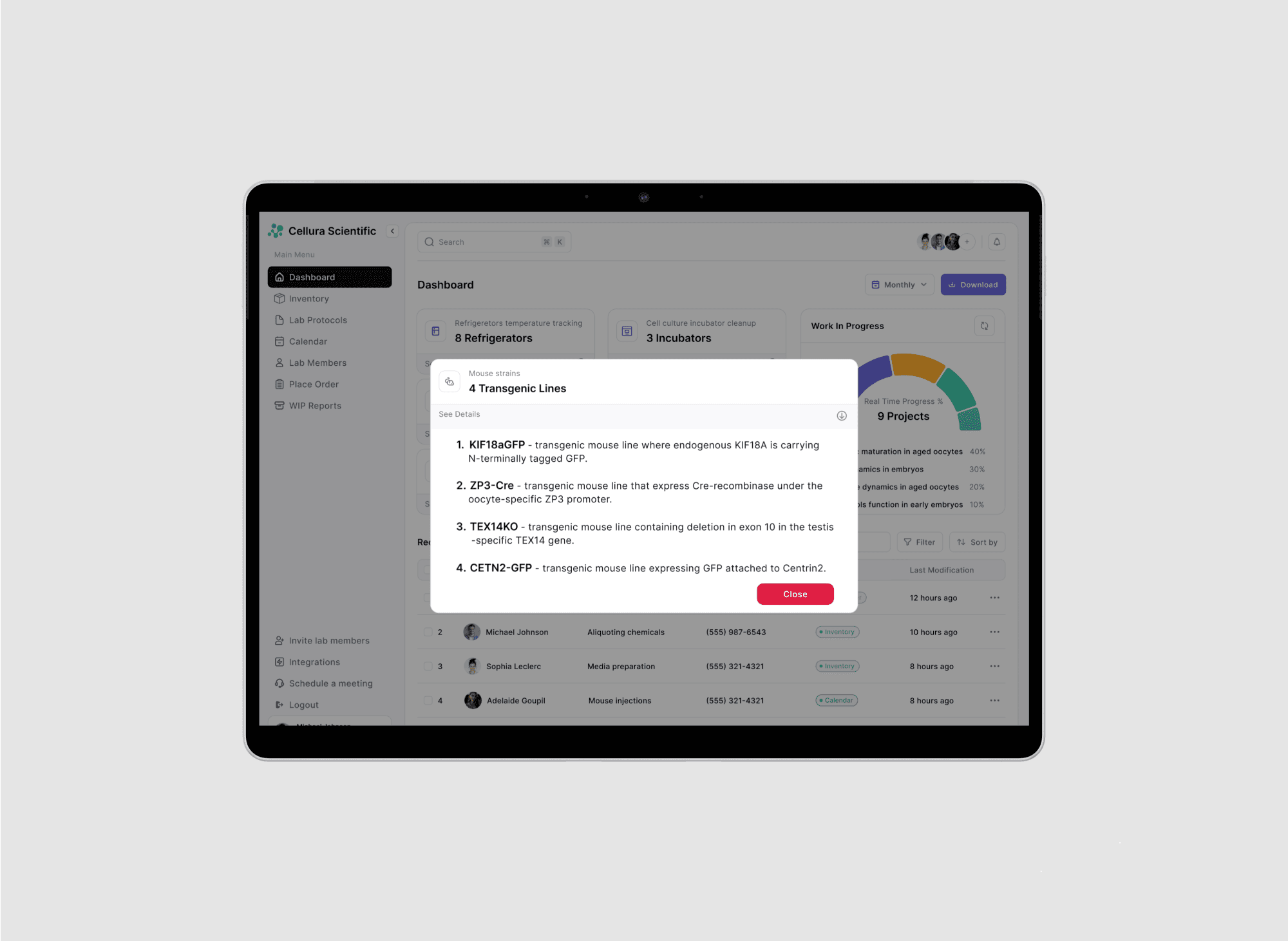
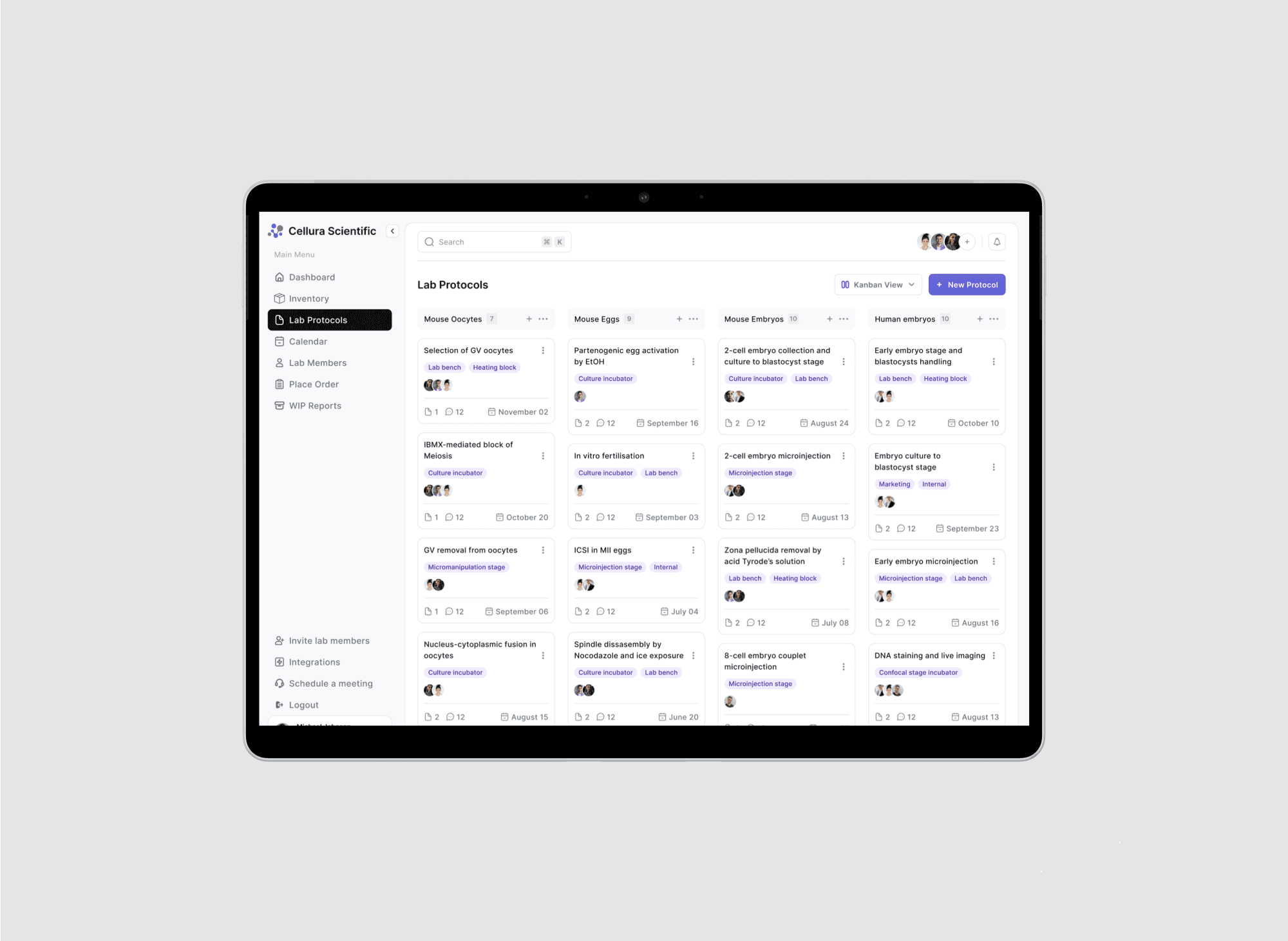
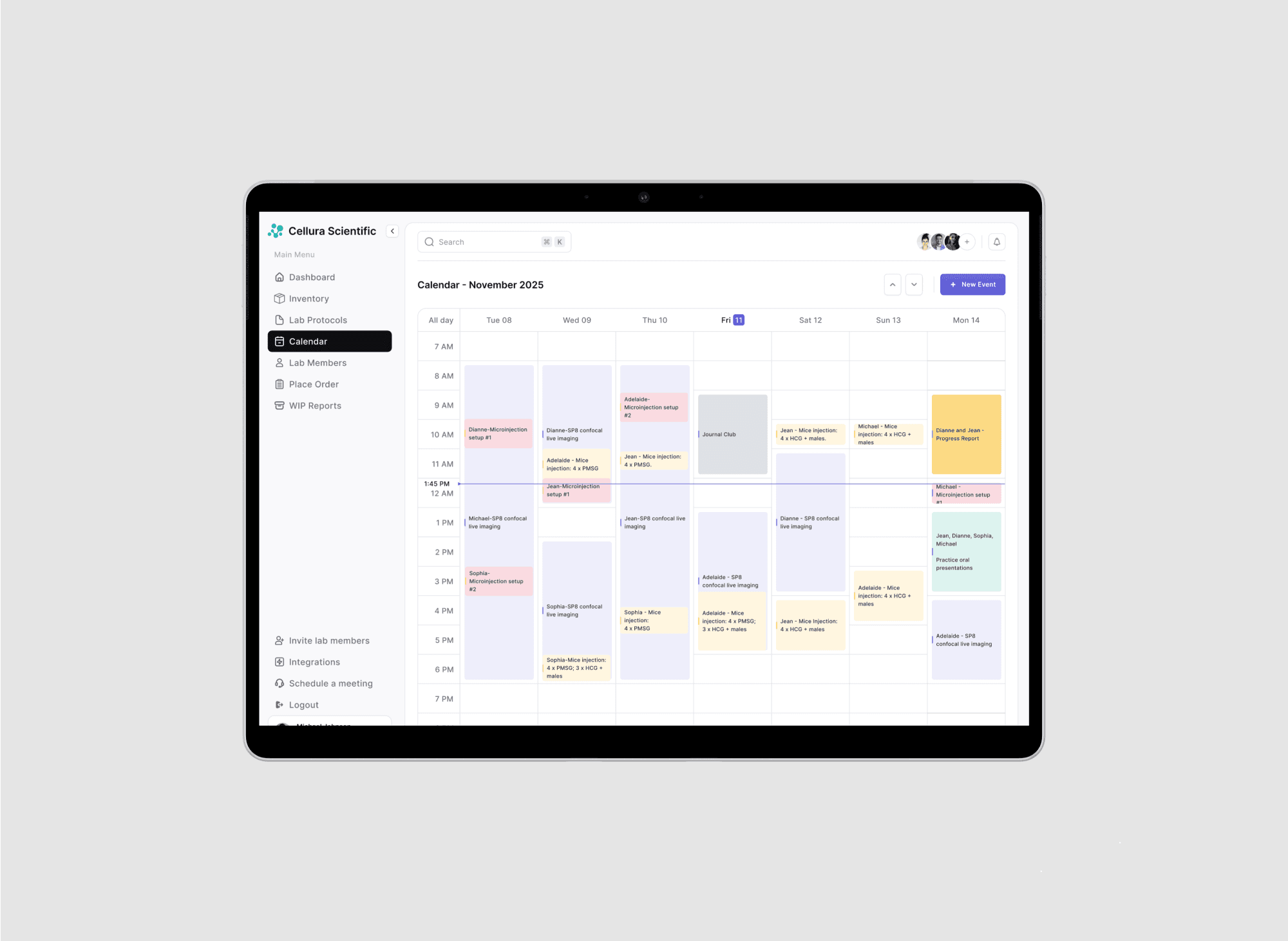
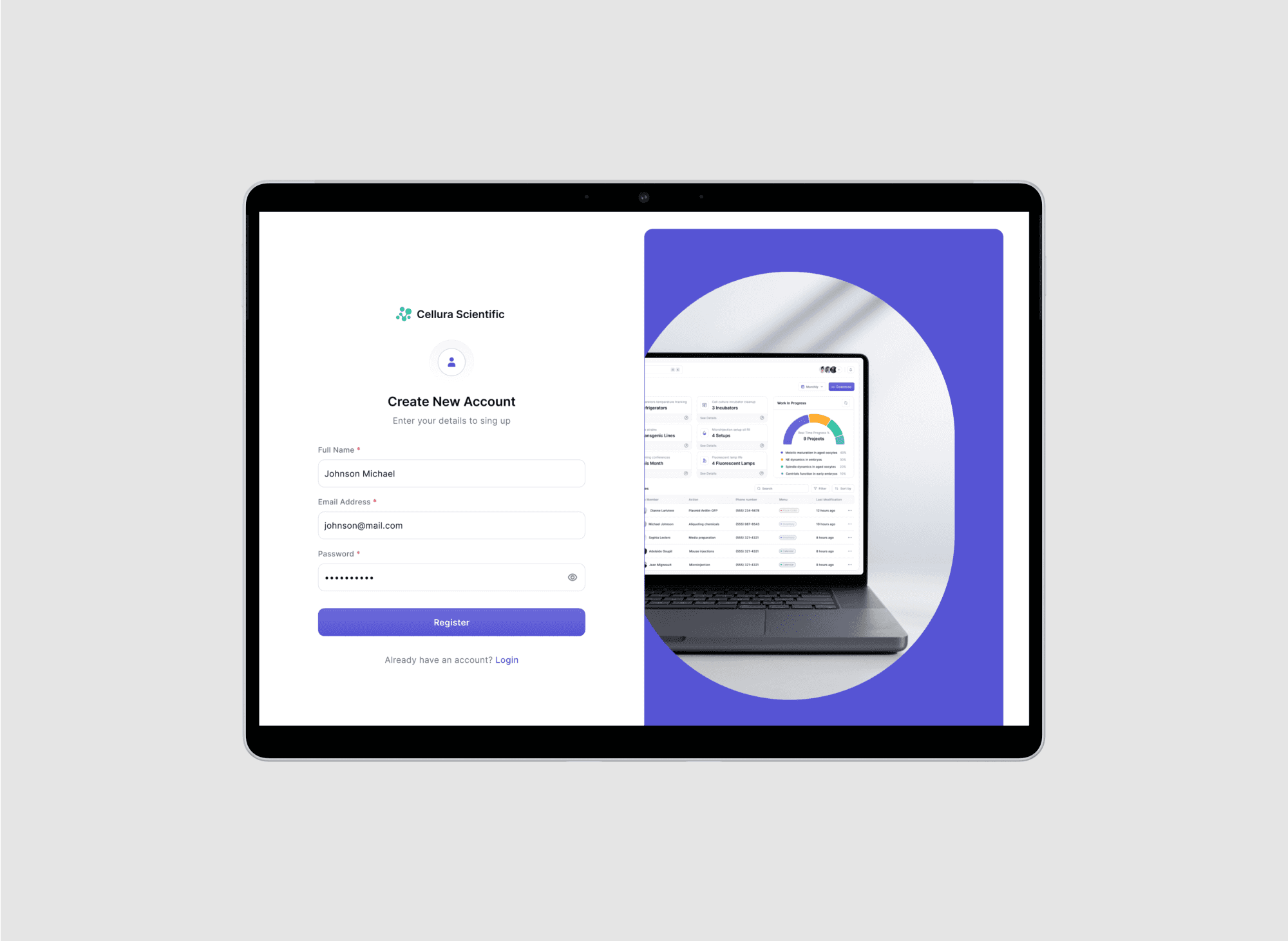
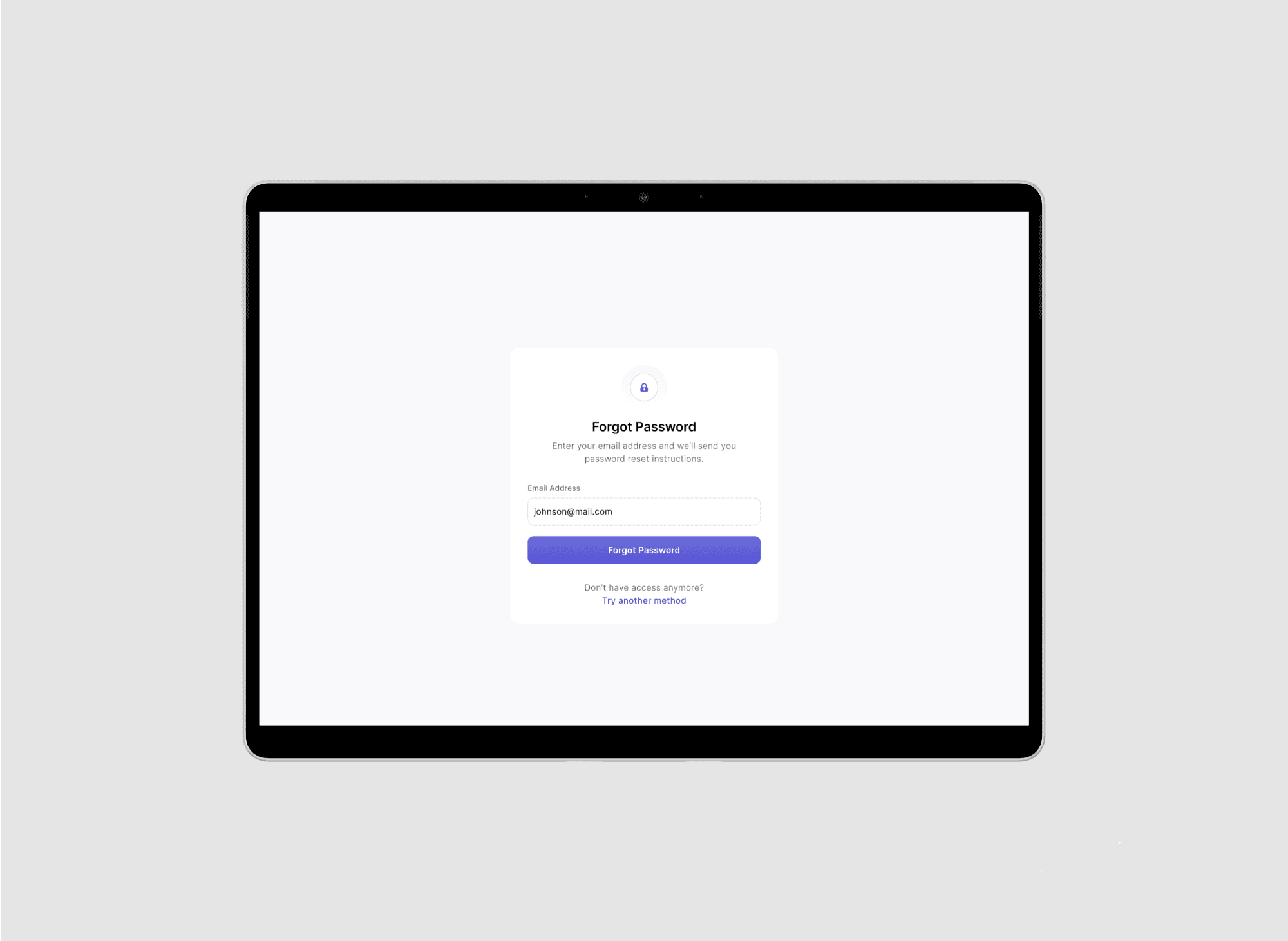
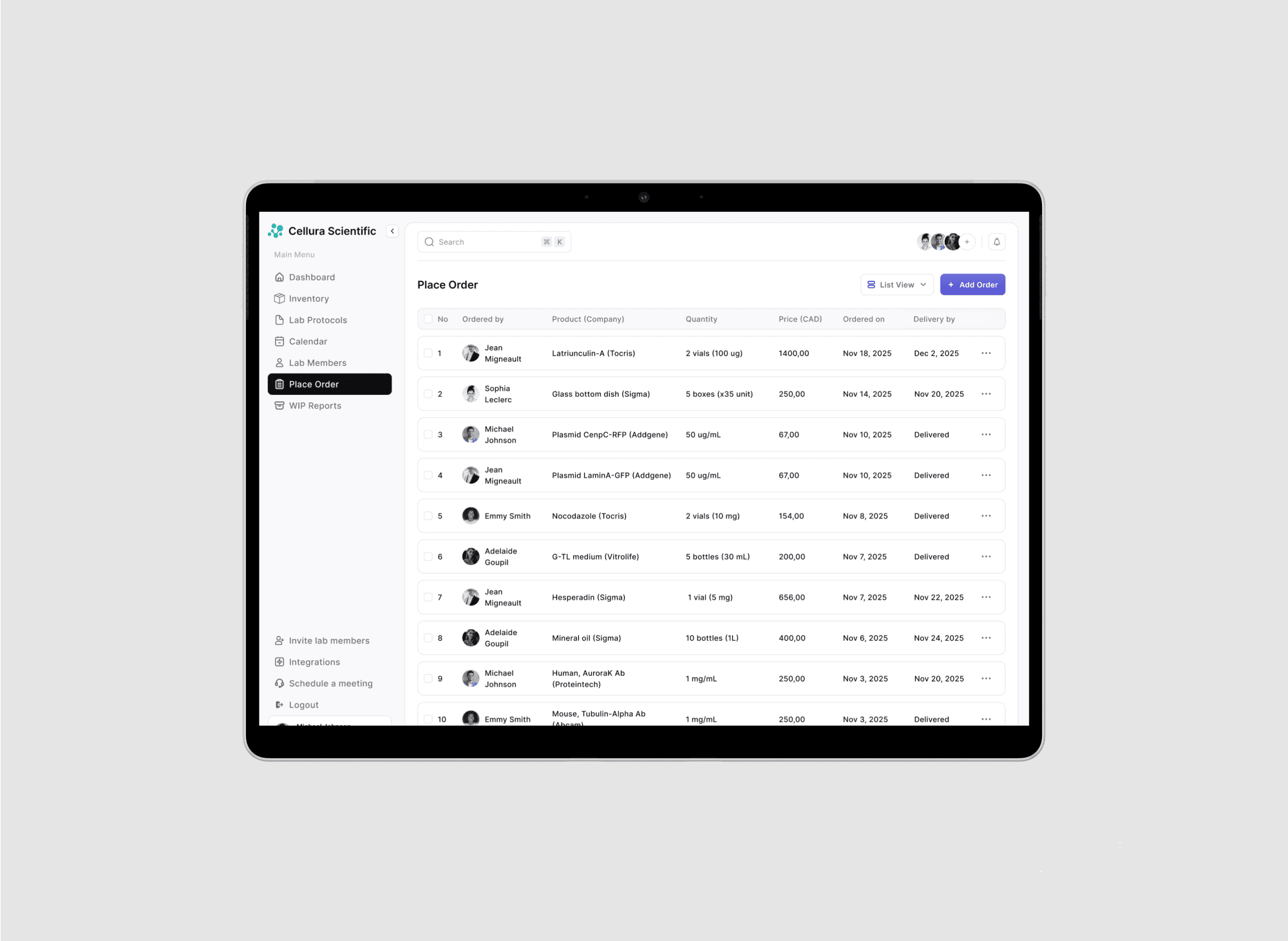
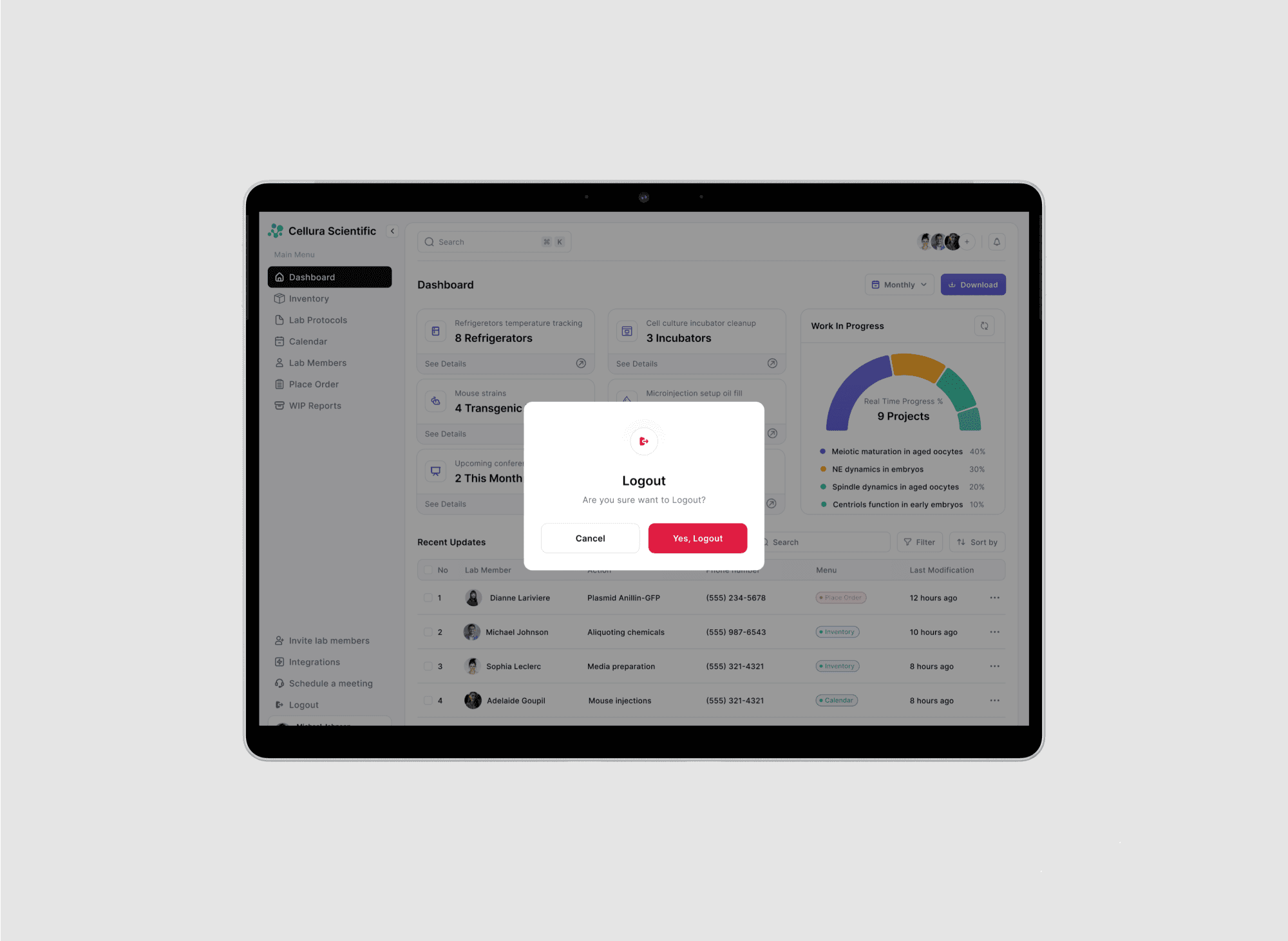
Key Features Centralized Onboarding Secure Code Entry: Quick identity verification and confirmation. Guided Recovery: Secure, step-by-step password reset. Infrastructure and Instrument Visibility Central Dashboard: Instant updates on lab systems, tasks, and experiments. Transgenic Insights: Scannable cards for mouse line data. Inventory and Sample Tracking Ordering Hub: Real-time inventory tracking and stockout prevention. Project and Task Management Shared Lab Calendar: Unified scheduling for experiments and equipment. Shared Protocols and Documentation Protocol Repository: Standardized storage for methods and materials. Impact Operational efficiency. Time savings for researchers. Improved collaboration. Next steps Usability testing with lab teams to measure task completion. Define success metrics: KPIs for task completion rate, user satisfaction. Expand integrations. Run a pilot in small academic lab.